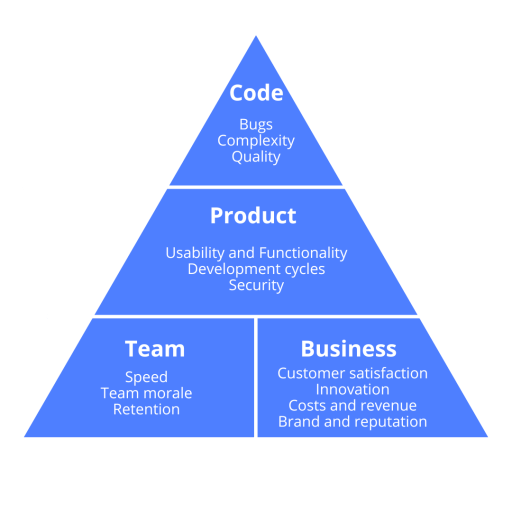
Technical debt is a business problem, not a code problem
Every engineering team has technical debt. The question isn't whether you have it — it's whether you understand what it's costing you. Most founders see tech debt as a vague engineering concern. In reality, it's the reason your competitors ship features in two weeks while yours take two months.
What technical debt actually costs
The visible cost is slow delivery. But the compounding costs are what kill companies:
Engineering velocity: New features take 3-5x longer because engineers spend 60% of their time navigating legacy code, workarounds, and undocumented behaviour.
Hiring and retention: Senior engineers leave when they're stuck maintaining systems they can't improve. Replacing them costs 6-9 months of salary.
Incident frequency: Brittle systems break more often. Each incident costs engineering hours, customer trust, and sometimes revenue.
Opportunity cost: Every sprint spent fighting fires is a sprint not spent building the feature that wins your next customer.
How to measure technical debt
You can't fix what you can't measure. Here are practical ways to quantify it:
Cycle time: Track how long features take from ticket to production. If it's increasing quarter over quarter, debt is accumulating.
Change failure rate: What percentage of deployments cause incidents? Industry benchmark is under 15%.
Code hotspots: Use tools like CodeScene or git log analysis to find files that change constantly and have high complexity.
Developer surveys: Ask your team: "What slows you down most?" The answers are remarkably consistent and actionable.
A paydown strategy that works
The biggest mistake teams make is treating tech debt as an all-or-nothing rewrite. Instead, use the 20% rule:
Dedicate 20% of each sprint to debt reduction — not as a separate initiative, but woven into feature work.
When you touch a module to add a feature, improve the module. Leave it better than you found it.
Prioritise debt that blocks the next quarter's roadmap. Not all debt is equal — some is cheap to carry.
Getting leadership buy-in
Translate technical debt into business language. Don't say "we need to refactor the auth module." Say "our authentication system adds 3 weeks to every feature that touches user accounts, and we have 4 such features planned next quarter. A 2-week investment now saves 10 weeks over the next 6 months."
Leaders respond to ROI, not code quality arguments. Frame every debt paydown as a multiplier on future velocity, and you'll get the time you need.
Follow me to keep in touch
Where I share my creative journey, design experiments, and industry thoughts.