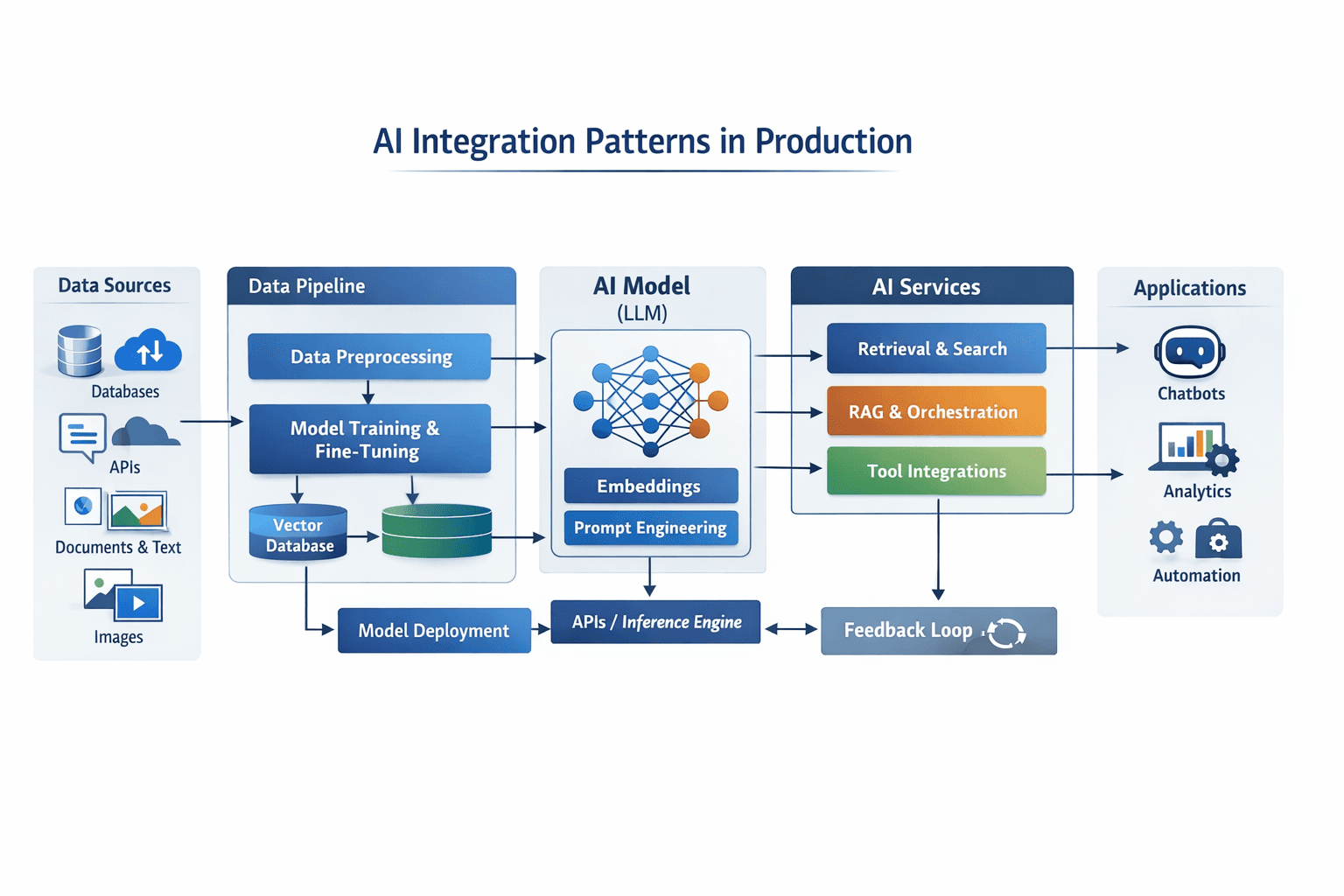
The gap between demo and production
Building an AI demo takes an afternoon. Shipping AI that handles 10,000 requests per day without hallucinating, timing out, or bankrupting you on API costs — that takes architecture. Most teams discover this the hard way.
RAG: the pattern that actually works
Retrieval-Augmented Generation (RAG) is the most reliable pattern for production AI applications. Instead of fine-tuning models or hoping they know your domain, you retrieve relevant context from your own data and feed it to the model with each request.
A production RAG pipeline needs:
Vector database: Pinecone, Weaviate, or pgvector for PostgreSQL. Choose based on scale and existing infrastructure.
Chunking strategy: How you split documents matters more than which embedding model you use. Semantic chunking outperforms fixed-size every time.
Retrieval ranking: Don't just return the top-k nearest vectors. Use hybrid search (semantic + keyword) and reranking for relevance.
Context window management: Stuff too much context and the model ignores it. Too little and it hallucinates. Test and measure.
Error handling and fallbacks
AI responses are non-deterministic. Your system must handle:
Timeouts: LLM API calls can take 5-30 seconds. Set aggressive timeouts and stream responses where possible.
Hallucination detection: Implement output validation. Check for factual grounding against your source documents.
Graceful degradation: When the AI service is down, show cached responses, fall back to traditional search, or clearly communicate the limitation.
Rate limiting: Protect against runaway costs with per-user and per-minute request limits.
Cost management at scale
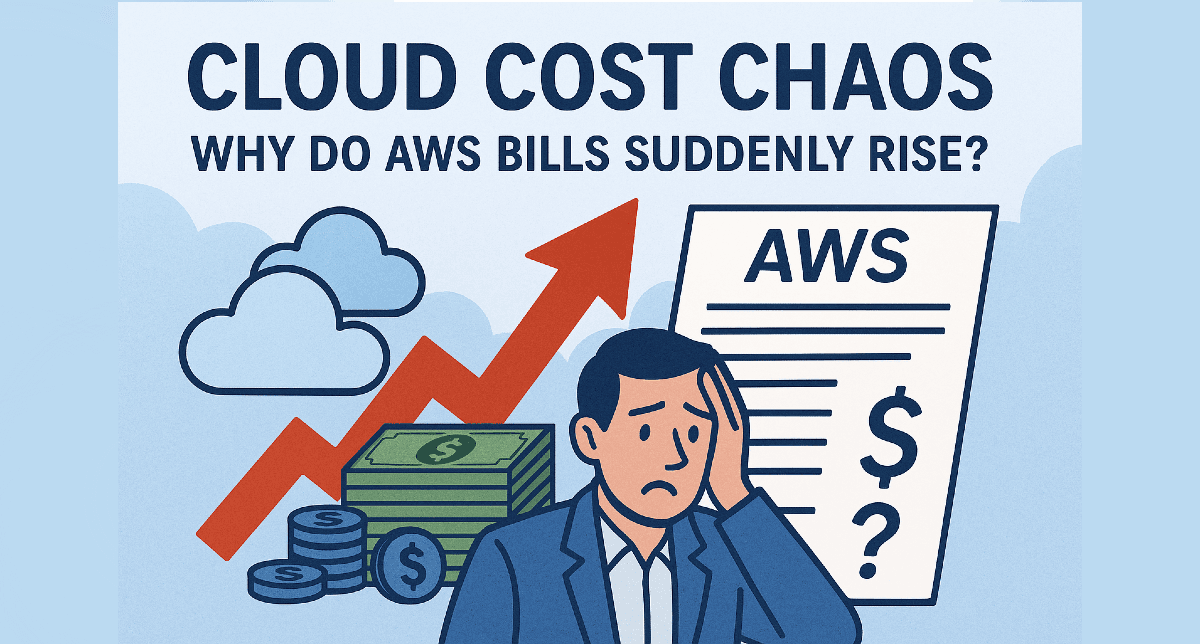
AI API costs scale linearly with usage. At production volumes, this adds up fast:
Cache frequent queries and their responses
Use smaller models for simple tasks (classification, extraction) and reserve large models for generation
Implement prompt compression to reduce token counts
Monitor cost per request and set budget alerts
When NOT to use AI
Not every problem needs a language model. Skip AI when:
Deterministic logic solves the problem (rules engines, decision trees)
Accuracy requirements are above 99% and errors have real consequences
Latency requirements are under 100ms
The problem is well-solved by traditional search or filtering
The integration checklist
Before shipping AI to production: implement structured logging for every AI call, set up cost monitoring dashboards, build a human-in-the-loop review process for edge cases, and establish an evaluation framework that measures quality over time. AI systems degrade silently — monitoring isn't optional.
Follow me to keep in touch
Where I share my creative journey, design experiments, and industry thoughts.